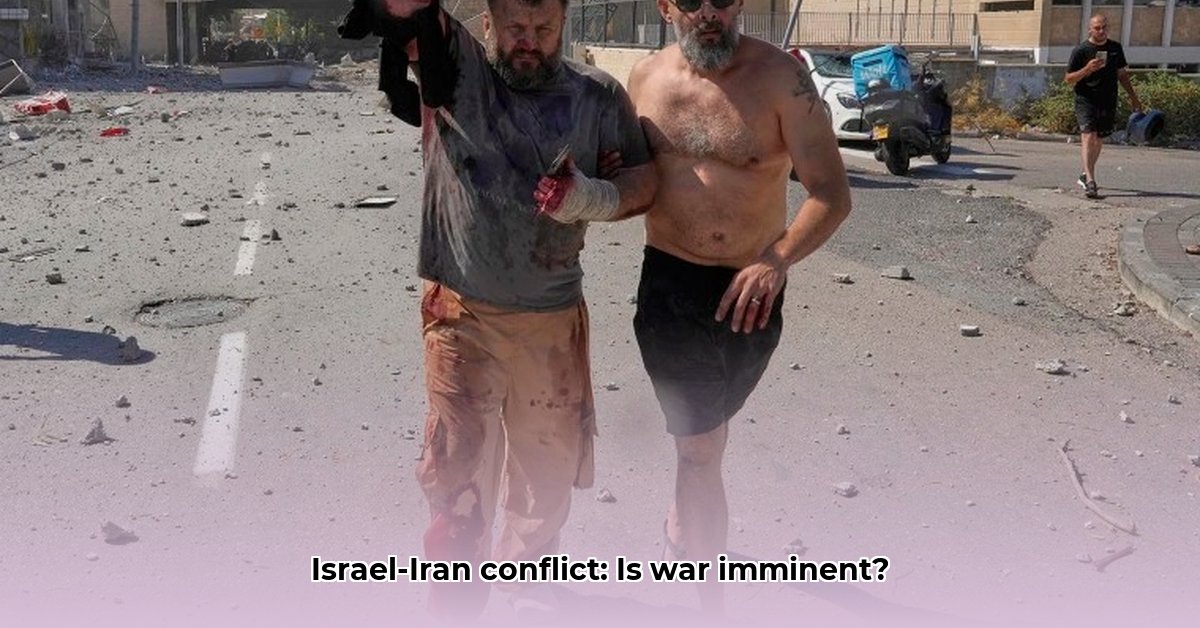
The situation between Israel and Iran has sharply escalated, marking a significant intensification of their long-standing conflict. Recent events witnessed a concerning exchange of attacks, leaving both sides claiming victories while suffering considerable losses. This complex and volatile situation presents a challenging picture with an uncertain future.
Recent Developments: A Dangerous Game of Cat and Mouse
Israel reports successful strikes against Iranian military targets, particularly those linked to the Quds Force. These actions, however, haven't deterred Iran from retaliating with drone attacks, revealing vulnerabilities in Israel's defenses. The exchange demonstrates a dangerous tit-for-tat escalation, with each side seemingly determined to inflict damage while attempting to minimize its own losses. This back-and-forth underscores the volatile nature of the conflict and the potential for further escalation.
The Human Cost: Civilians in the Crossfire
The escalating conflict has tragically resulted in significant civilian casualties inside Iran. While the precise figures remain contested, and some numbers may be inflated for propaganda purposes, the undeniable reality is that innocent people are paying the price. This highlights the devastating humanitarian consequences of the ongoing conflict, underscoring the broader impact beyond military targets. Such losses serve as a stark reminder of the suffering inflicted upon vulnerable populations during times of war. How can this senseless loss of civilian lives be justified, and what measures can be taken to minimise such harm in the future?
Military Actions: Assessing Successes and Failures
Both Israel and Iran are publicizing their perceived successes in the recent attacks. Israel emphasizes its airpower and the effectiveness of its missile defense systems, claiming a high interception rate. However, successful Iranian drone strikes within Israel demonstrate that no defense system is impenetrable, particularly against saturation attacks. The ability of Iran to successfully penetrate Israel's defenses highlights the increasing sophistication of Iranian weaponry and strategy. This military tit-for-tat raises the question: Can either side claim a definitive victory in this escalating conflict, or is a dangerous stalemate the more accurate description?
The United States’ Role: A Crucial Decision
The US's potential involvement remains a significant uncertainty casting a long shadow over the conflict. The decision of whether or not to intervene directly is a complex one, fraught with potential consequences both domestically and internationally. The choice to intervene or to remain a passive observer will have profound implications not only on the immediate conflict but on the broader geopolitical landscape. How will the US ultimately respond to this crisis, and what impact will its decision have on the situation's trajectory?
Looking Ahead: Unpredictable Outcomes and Long-Term Consequences
Predicting the future course of this conflict is challenging. Several factors, including regional stability, global oil prices, and the future of Iran's nuclear program, are directly influenced by the ongoing tensions. Prolonged conflict risks further regional destabilization and has the potential to draw in other regional actors. Are there any viable paths towards de-escalation, or is the conflict destined to continue its dangerous escalation in the foreseeable future?
Key Players and Their Objectives
| Stakeholder | Short-Term Goals | Long-Term Goals |
|---|---|---|
| Israel | Neutralize Iranian threats, deter further aggression | Regional security, secure long-term peace |
| Iran | Project power, counter Israeli actions, internal stability | Regional influence, advancements in military capabilities |
| United States | Regional stability, prevent wider conflict | Counter Iranian influence, prevent nuclear proliferation |
| International Community | Humanitarian aid, diplomatic solutions, peaceful resolution | Regional stability, prevent escalations |
The Risks: A Path Towards Wider Conflict?
The risks associated with the escalation are substantial. There's the potential for regional conflict expansion, drawing in other nations and dramatically increasing the human cost. Furthermore, the situation has the potential to ignite wider conflagration far beyond current actors. What would happen if a full-scale conflict erupted, and what steps can be taken to reduce the risks associated with such a disastrous outcome?
Conclusion: A Complex and Evolving Situation
The Israel-Iran conflict is complex and dynamic, making it difficult to provide definitive conclusions. Ongoing events and various perspectives make it crucial to continue monitoring the developments closely. The international community should remain engaged and actively search for diplomatic solutions to prevent further suffering.